Wow, in updating a review from a few years ago, it is apparent how much the category has grown up. The golf simulator projector market has matured significantly, with laser light sources, automated setup, and dedicated Golf Modes now standard at mid-tier pricing—a dramatic improvement from just a few years ago. Today’s best golf simulator projectors are designed specifically for indoor golf, with brightness, throw distance, and color tuning optimized for impact screens instead of living-room movie nights.
The jump in quality is obvious the first time you fire up a modern short throw or 4K golf simulator projector. Shadows and glare are easier to control, even in tight garage or basement builds, and sharp 4K or high-lumen 1080p images make ball flight and course detail look far more lifelike.
In this guide, we break down the top golf simulator projectors for 2025/2026, zeroing in on the best overall, best 4K, best short throw, and best value picks. The goal is simple: help you match a projector to your bay dimensions, budget, and expectations for realism.
|
Projector |
Our Evaluation |
Key Facts |
Check Prices |
|---|---|---|---|
 |
Best Overall |
||
 |
Best Short Throw |
||
 |
Strong Contender |
||
 |
Best Value Optoma GT2100HDR |
Golf Simulator Projector In-Depth Reviews
Now that you’ve seen the key specs side by side, let’s dig into what actually sets these golf simulator projectors apart in real-world use. From the ultra-bright, true 4K BenQ LK936ST to budget-friendly short throw workhorses like the Optoma GT1080HDR, the next sections break down how each winner performs on image quality, ease of setup, room size flexibility, and overall value so you can confidently choose the right fit for your golf sim build.
Best Overall: BenQ LK936ST

5,100
4K UHD
0.8
Laser
20k
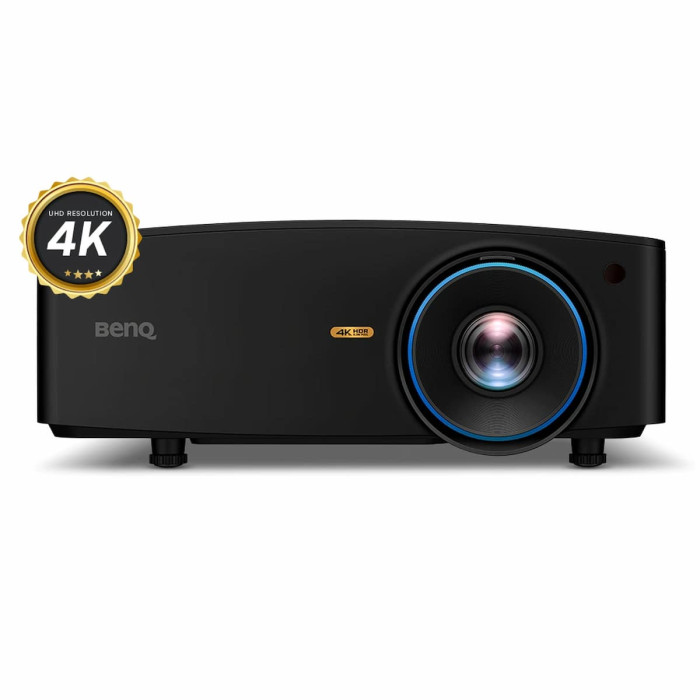
The LK936ST represents the pinnacle of golf simulator projection technology. This true 4K laser projector delivers an exceptional 5,100 lumens of brightness—the highest in its class—ensuring crisp visuals even in well-lit spaces. Its 0.8 short throw ratio with extensive horizontal and vertical lens shift provides unmatched installation flexibility, allowing ceiling mounting that eliminates shadows while filling screens up to 10 feet tall from 14-15 feet away.
For a golf sim owner, those specs translate directly into a smoother, more immersive experience. The huge 5,100-lumen output means you can leave some lights on, film swings, or host friends without washing out the image, while the 0.8 short throw and generous lens shift make it far easier to mount the projector in a safe spot that doesn’t create shadows or glare. True 4K and Golf Mode give you ultra-crisp fairways, greens, and ball flight that make reading distances and aiming targets feel more like real golf, and the long-life laser engine lets you log thousands of practice swings with virtually no maintenance or lamp replacement costs.
Why it won: The combination of true 4K resolution, commercial-grade brightness, and BenQ’s dedicated Golf Mode (which enhances greens and blues for realistic course rendering) makes this the go-to choice for serious enthusiasts and commercial installations. The dust-sealed laser engine is rated for 20,000 hours with minimal maintenance.
|
Pros
|
Cons
|
|---|---|
BenQ LK936ST Golf Projector: What Else You Should Know
Some more information you might find helpful about the golf simulator projector.
Best Short Throw: BenQ AH700ST

4,000
1080p
0.69–0.83
Laser
20K
The AH700ST is the rare short throw projector that feels like it was built specifically for golf simulator owners rather than repurposed from home theater. This 1080p laser model pushes out 4,000 lumens, which is plenty of brightness for a typical garage or basement sim where you want a few lights on for safety and video. Its 0.69–0.83 throw ratio is right in the golf sweet spot: close enough to avoid shadows and glare, but not so ultra‑short that placement becomes finicky.
The big story, though, is how easy BenQ has made setup. With Auto Screen Fit, Auto Focus, and a motorized 1.2x zoom lens, you can stand on the ground, press a button on the remote, and watch the projector automatically size and square the image to your impact screen. For most DIY builders, that alone takes the stress out of dialing in a new setup.
For a golf sim owner, those features translate into faster build time and less trial‑and‑error. The 4,000‑lumen laser output means you can hit balls with the lights at a comfortable level and still see ball flight and course detail clearly. The short throw distance and flexible zoom give you good options for ceiling mounting above and slightly behind the hitting area, keeping the projector out of harm’s way without casting your shadow onto the screen.
Color performance is strong for the price, and BenQ’s Golf Mode helps greens, fairways, and sky tones look more natural than on generic “presentation” projectors. Add in the long‑life laser light source and low input lag, and the AH700ST becomes an easy recommendation for golfers who want a bright, purpose‑built short throw projector without jumping all the way up to 4K pricing.
|
Pros
|
Cons
|
|---|---|
More Info About the BenQ AH700ST
A bit more information you may find helpful.
Strong Contender: BenQ TH671ST

3,000
1080p
0.69–0.83
Lamp
15K
The TH671ST has been a staple in golf simulator builds for years, and it’s still a strong contender in 2025/2026 for budget‑minded golfers. This 1080p, 3,000‑lumen short throw projector doesn’t have the latest laser engine or automated setup tricks, but it nails the fundamentals: a 0.69–0.83 throw ratio that works perfectly in most single‑bay sims, low input lag in the 16 ms range, and very solid color out of the box.
It’s also compact and lightweight, which makes ceiling mounting simple and gives you flexibility if you ever need to move the projector between spaces. For many golfers upgrading from a cheap business projector, the TH671ST is the first big step up where courses actually start to look like what you see on TV.
In day‑to‑day sim use, the TH671ST’s strengths are its responsiveness and reliability. Shots appear on screen quickly, making practice sessions and rounds feel smooth rather than laggy or delayed. The 3,000‑lumen lamp is best in darker rooms, but in a properly light‑controlled garage or basement it does a good job of keeping ball flight and target lines crisp.
Because it’s a lamp‑based design, you’ll eventually need to budget for a replacement bulb, but that also keeps the initial purchase price lower than comparable laser models. If you want a proven, short throw projector that works well with today’s popular golf sim software and don’t mind dimming the lights a bit, the TH671ST remains one of the safest, most battle‑tested picks in the category.
Because it’s a lamp‑based design, you’ll eventually need to budget for a replacement bulb, but that also keeps the initial purchase price lower than comparable laser models. If you want a proven, short throw projector that works well with today’s popular golf sim software and don’t mind dimming the lights a bit, the TH671ST remains one of the safest, most battle‑tested picks in the category.
|
Pros
|
Cons
|
|---|---|
More Info About the BenQ TH671ST
A bit more information about the golf simulator projector.
Best Value: Optoma GT2100HDR

4,200
1080p
~0.5
Laser
30k
The GT2100HDR is a great example of how far “value” projectors have come for golf simulators. Instead of a traditional lamp, Optoma uses a DuraCore laser light source rated up to 30,000 hours, paired with 4,200 lumens of brightness in a compact short throw chassis.
That combination is huge for golf sim owners: you get serious punch for ambient‑light garages and bonus‑room bays, along with essentially maintenance‑free operation for years of heavy use. The 0.5‑ish throw ratio lets you mount the projector close to the screen, which helps keep it out of the swing path while reducing the chances of casting a shadow across the hitting area. HDR10 support and a dedicated Game Mode help bring out contrast and detail in modern golf sim software without adding noticeable input lag.
In practice, the GT2100HDR feels like a workhorse built for everyday sim sessions. Brightness is the star of the show—ball flight, targets, and UI elements stay visible even when you leave some overhead lighting on, which is especially helpful if your sim space doubles as a garage or family room. The laser engine means you don’t have to worry about lamp dimming and replacements, which is a major plus if you’re hitting thousands of shots a month.
You don’t get the automated setup and niceties of more expensive BenQ models, and mounting can require a bit more planning due to the very short throw and offset. But if your priority is maximum brightness, low operating cost, and a picture that looks great with today’s golf software at a mid‑range price, the GT2100HDR delivers one of the strongest value propositions in the current projector lineup.
|
Pros
|
Cons
|
|---|---|
More Info About the Optoma GT2100HDR
A bit more information to nerd out over.
Other Top Performing Golf Simulator Projectors
BenQ AK700ST 4K Golf Simulator Projector – A true 4K, 4,000‑lumen short‑throw laser projector with Auto Screen Fit and Golf Mode, the AK700ST is ideal for golfers who want near‑flagship image quality with easier setup and a lower price point than the LK936ST.
BenQ AH500ST Golf Simulator Projector – Built for compact and floor‑mount sims, the AH500ST combines a 4,000‑lumen 1080p laser engine with an ultra‑short 0.5 throw and Screen Fill, so you can perfectly frame a variety of screen sizes in very tight rooms.
ViewSonic LS711HD Golf Sim Laser Projector – The LS711HD delivers 4,200 lumens, a 0.49 short‑throw lens, and long‑life laser light source, making it a strong high‑brightness choice for 16:9 or 4:3 golf bays where you need a punchy image on a budget.
Epson EpiqVision Ultra LS800 – With 4K PRO‑UHD pixel‑shifted resolution, 4,000 lumens, and an ultra‑short‑throw 3LCD laser design, the LS800 is ideal for golfers who want a bright, TV‑like picture from just inches off the wall in a multipurpose media‑room simulator.
Optoma GT1080HDR Short Throw Projector – A long‑time value favorite, the GT1080HDR pairs 3,800‑lumen 1080p output with a short‑throw lens, HDR/4K input support, and low‑lag gaming mode, giving budget builders bright, responsive visuals for modern sim software.
BenQ TK710STi 4K Laser Golf Simulator Projector – A 4K short‑throw laser option recommended by The Indoor Golf Shop, the TK710STi combines bright, color‑accurate 4K PRO UHD imaging with a golf‑friendly throw distance, giving sim owners a sharper, more modern alternative to 1080p projectors without jumping to the LK936ST’s price and complexity.
Golf Simulator Projector FAQ’s
What throw ratio is best for a home golf simulator projector?
For most single‑bay home simulators, a short throw ratio between about 0.6 and 0.9 works best. That usually lets you mount the projector above and slightly behind the hitting area while still filling the impact screen and avoiding shadows from your swing.
Is 4K really necessary for a golf simulator, or is 1080p enough?
1080p is still plenty for many golfers, especially on impact screens where the fabric texture softens fine detail. 4K shines if you have a larger screen, sit closer to the image, or want sharper text, ball traces, and course detail for a more premium feel.
How many lumens do I need for a bright, clear image on my impact screen?
In a dark or well‑controlled room, around 3,000 lumens is usually enough. If you have some ambient light or a garage/bonus room setup, 3,500–4,500 lumens (or more) helps keep ball flight and course graphics clear without turning the space into a cave.
Do I really need a laser projector, or can I save money with a lamp model?
Lamp projectors cost less up front but gradually dim and eventually need bulb replacements. Laser models stay brighter for longer, usually run cooler and quieter, and have far less maintenance, which can make them a better value if you practice or play a lot.
Where should I mount my projector so it doesn’t get hit by golf balls?
Most builders mount the projector on the ceiling 3–5 feet in front of the hitting area, centered or slightly offset and above head height. In very short rooms, a floor‑mount enclosure just in front of the screen can work, as long as the projector is protected by a cage or box rated for golf simulator use.